Holistic Happiness
I don’t think there are many of us who’ve come to yoga without some baggage.
Even if you’re not aware of it initially, give it some time and it’s possible you’ll be sobbing through a savasana or heart opener before you can say, 20 kilos over? But I barely packed any shoes!
Such is the nature, the wondrous, blissful, mysterious nature, of our yoga practice. It packs a punch of life-affirming goodness that delivers an awareness of ourselves that we didn’t know we didn’t know. Peel back those layers though, and along with stirring up some feel-goods it can bring up a host of issues that you may never have intended to revisit or even acknowledge.
For some it’s all part of an on-going journey we travel every time we get on the mat. It’s a mood lifter, for sure. For other people though, who struggle with depression or mental illness, it can be a real, positive part of their wellbeing when taken into the wider context of their treatment.
How does it help? Well, recommended lifestyle changes that may be beneficial include practicing mindfulness and getting regular exercise three or four times a week. Tick and tick.
Except, of course, there’s a lot more to it than that.
Currently one in 10 New Zealanders are now prescribed anti-depressants. It’s estimated one in six of us will experience serious depression and that one in seven young people in this country will experience a major depressive disorder before they turn 24. One in seven.
On an international scale mental illness represents the biggest economic burden of any health issue in the world. According to the World Health Organization (WHO) and the World Economic Forum (WEF):
- Globally it is a $2.5 trillion cost
- And is projected to cost $6 trillion by 2030
- 450 million people worldwide are estimated to suffer from mental health conditions
- 60% of these people do not receive any form of care
- 90% of people in developing countries do not receive any form of care
- Women are 70% more likely than men to become depressed
Integrative health professional Dr Kathleen Wills and co-founder of the mental health charity Live More Awesome, Dan Drupsteen, spoke at a recent ecostore #OnlyGoodStuff event about the importance of looking at the whole picture of wellness to find happiness rather than anti-depressants being the only option.
They stressed the importance of nurturing your mind, body and spirit to lift moods, of adopting a holistic approach to depression that looks at nutrition, sleep, thought patterns and lifestyle factors.

“We want people seeing colour and feeling the vibrancy of life…”
– Dr Kathleen Wells
Dr Kathleen assists many people with a range of issues at her Auckland clinic and is passionate about treating the underlying causes that may not be addressed with anti-depressants, such as gut health and hormonal imbalances, or even correctly diagnosed, such as adrenal fatigue.
She advised that symptoms of depression include:
- Exhaustion and fatigue that lasts more than 3-5 days, and are not attributable to a crisis or relationship loss or grieving
- A sense of hopelessness
- Insomnia or excessive sleep habits
- Poor appetite with weight loss
- Or increased appetite with weight gain
- Loss of interest in normal activities and pleasures
- Decreased sex drive
- Difficulty in concentrating
- Frequent suicidal thoughts
The new formulations of anti-depressants are popular therapies, Dr Kathleen says, but little is known about their long-term side effects. Prozac, for example, has only been studied for 12 years whereas “some natural medicines for depression have been around since the medieval times and proven to be effective in standard scientific clinical trials”.
Evidence based natural alternatives include:
- Turmeric
- St John’s Wort
- Fish oil (at least 1000mg/day up to 20gm)
- Vitamin D3 (4000IUD/day)
- Vitamin B complex (with B12 1000mg)
- Grapefruit seed extract
- Probiotics for healthy gut bacteria
- Additionally, the prestigious US Johns Hopkins School of Medicine has recently released information that meditation was just as effective as anti-depressants for mental wellness
There are also essential research-based mood foods that will have an effect on your mental wellbeing:
- Brazil nuts – great source of antioxidant selenium
- Omega 3 fatty acids – choose oily fish (sardines, mackerel and salmon), walnuts, chia seeds and flaxseed
- Oats
- Bananas
- Lentils
- Chicken and turkey
- Spinach
- Water
- Raw cacao (Does that stretch to 72% dark choc? Because that makes me feel better.)
For Dr Kathleen these steps, along with lifestyle changes (think regular massage, using a solar lamp in winter, mindfulness, exercise, surrounding yourself with positive people and dealing with any issues that you have tucked away) and tests she runs from her clinic, are key to becoming well.
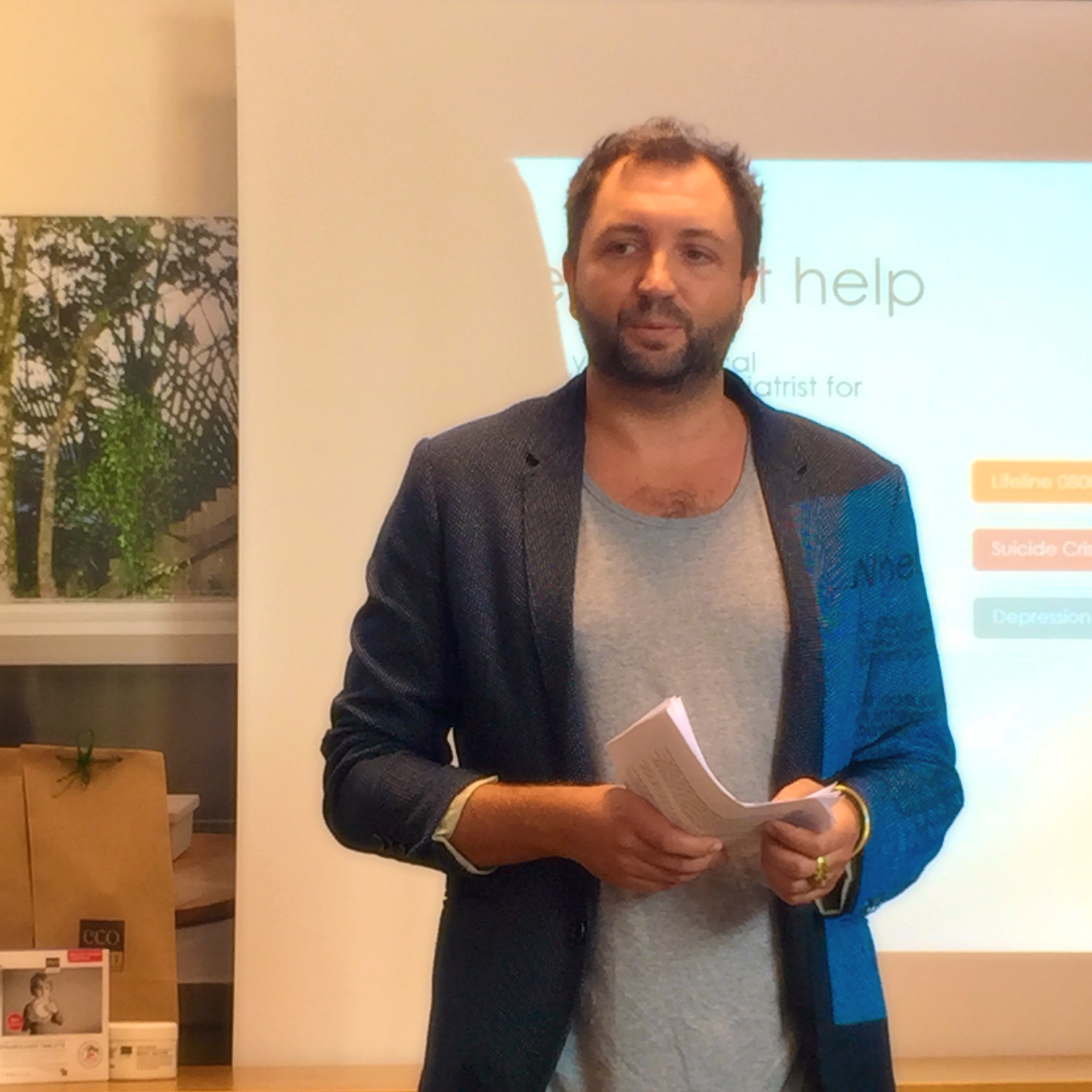
“Connected relationships between people, that creates change.”
– Dan Drupsteen
Dan’s story comes from his experience of depression itself. Before starting Live More Awesome with his friend Jimmi Hunt, he’d hit rock bottom after returning from a 10-day silent retreat in Thailand. He tried every conceivable treatment available including anti-depressants but it wasn’t until he completely ran out of money that he asked for help.
The long and difficult process to reach where he is today is inspirational and can be read on his website here and, of course, the awesomeness that is the world’s biggest waterslide, built to draw awareness to mental health, can be read about here.
He’s since set up a free online resource, The Wellness Report, a 25-minute survey with 230 questions set to generate a customised list of recommendations designed to help diagnose and deal with depressive symptoms.
The Wellness Report, which took Dan four years to complete and “was created out of my own frustration” is backed up by a team of advisors, including Dr Kathleen, that meets every six months to ensure the questions and resulting information are kept up to date. People in more than 35 countries have used it.
“I promised that when I got well I would dedicate my talents to helping others get well and stay well, “ Dan said.
That really is awesome.
– Jane
Thank you, ecostore! You know how to bring the best people together.
[line]
And lastly, some info on where to get help for depression:
- Talk to a friend or family member
- Consult with your GP, psychiatrist, or an integrative or natural medicine doctor
- For natural approaches, consult with an integrative or natural medicine doctor
- Helplines available such as:
Lifeline (0800 543 354)
The Depression Helpline (0800 111 757)
Youthline (0800 376 633)
- The Mental Health Foundation has free information and training, and advocates for policies and service that support people with experience with mental illness
[line]
New Zealand figures: NZ Herald 2012
Alternative or complimentary treatments: referenced from David Mischoulon and Jerrold Rosenbaum’s book Natural Medications for Psychiatric Disorders; Considering the Alternatives
[line]
© The Yoga Connection